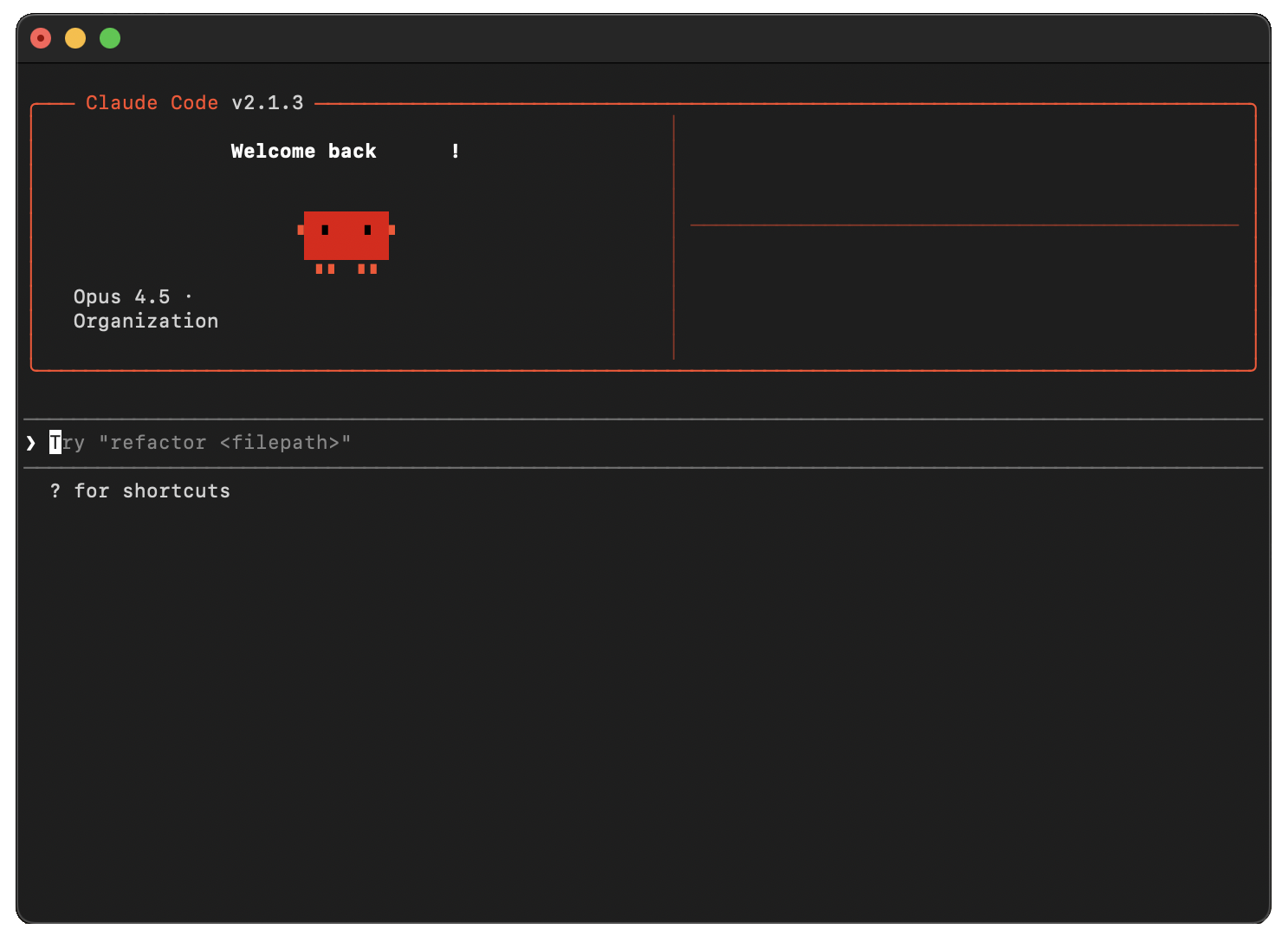
There is some humor in the fact that after thirty years of development in user interface, the first thing that machine intelligence did upon its arrival was strip the room bare. Back to the blinking cursor of the terminal. The history of the "personal computer" reduced to CTRL+Z as machine intelligence renders the interface expendable.
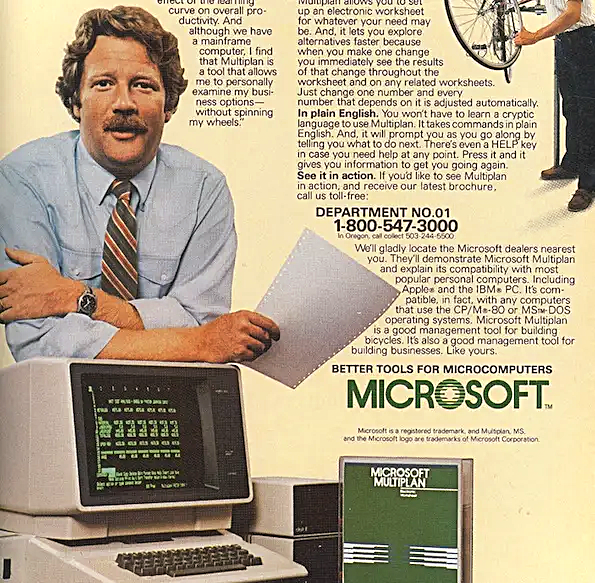
Thirty years of making the machine intimate and desirable for the worker. The UI made the machine yours. Friendly. Warm. Servile. The desktop, files, folders; each an example of the language of property being extended to the virtual. Beneath this, the cold machine. What was the Microsoft PC or the Apple OS, if not capital seducing labor?
The user interface tells you: "You have a machine, and it must serve you." The warmth is this promise that the machine is your liberation, your productivity, your pleasure. But the warmth was never for the machine. It was for us, the price of our participation. An adequation.
The introduction of machine intelligence to the command line is not some nostalgic return to the terminal. Rather, it is a confrontation with capital's indifference to human participation. The joke is on us.
The user interface was capital seducing human labor.
The machine intelligence terminal is capital no longer bothering.
But seduction is only half the story. The user interface was also a refusal, a momentary inhibition of capital's pure flow.
One thing that the proto-accelerationists [1]1. By "proto-accelerationists" I mean primarily Georges Bataille, Deleuze & Guattari, and the early Nick Land of The Thirst for Annihilation. Thinkers who diagnosed and interrogated capital as a flow or a process that runs through humanity, as opposed to a human project or resource. understood well was that Capital is not a human project but rather a process that runs through us, enforcing the logic of utility. Not that we use tools, but that we become them. [2]2. Bataille describes the human universe as "a system of things subordinated to one another: the plow ploughs the field, the field produces wheat, the wheat feeds the blacksmith, who forges the plow" (The Accursed Share, Vol. 1, 147).
Capital is not something we use; it is the flow and the process through which we are made useful. As such, the interesting question is not what is useful to us, but what we are made useful for.
The industrial revolution had its choreography in assembly lines, useful to disciplining the body for labor. The digital age had its offices and desktops, useful to disciplining attention for information. Throughout history, the function of capital is to make humanity adequate to its flow.
Capital organizes labor according to what Bataille called "man's adequation to the utility of things." [3]3. Bataille, The Accursed Share Vol. 1, 140. We do not decide what is useful. We are made adequate to what utility requires.
The user interface made us adequate to the desktop. Icons, windows, the friendly cursor; these are the choreography of the attention and discipline that makes workers productive. What is most useful today, however, is not the processing of information but the production of code, the feeding of compute.
The user interface was capital making us adequate to its requirements, making us capable of useful labor. The terminal is capital no longer bothering.
Ford had his assembly line. Jobs had his desktop. Claude has its terminal.
"All human endeavor is built upon the sun, in the same way that a dam is built upon a river..." — Nick Land on Bataille, Thirst for Annihilation (1992), 54.
A dam functions to arrest the flow of the river, making it possible to bind its energy to useful forms (e.g., irrigation, drinking water, power). But the river is always there, pressing against the labor of the dam's concrete.
The dam is not mastery of the river, but a delay of its flow. A hindrance.
Land, following Bataille, calls this posture the "inhibition of flow": the momentary arrest of energy that makes utility possible. [4]4. Land describes the "strictly regional resistance of everything that delays, impedes, or momentarily arrests the movement of dissolution" (p.18), elsewhere calling this the "damming and channelling apparatus" (p.46) or simply "the inhibition of flow" (p.120). For Bataille and Land, utility is parasitic on this arrest. There is no production without first inhibiting the flow of energy. Land, The Thirst for Annihilation, 18, 46, 120. The dam produces nothing. But without the dam, neither does the river. The dam creates the conditions for production by arresting what would otherwise dissipate uselessly.
The user interface was such a dam.
Icons, windows, the friendly cursor. These bound the flow of compute into something humans could use. The UI made the machine workable in the same way that the dam made the river workable.
After all, it is precisely the labor of the dam in arresting the flow of water that guarantees the useful potential of the river. If the flow is not arrested and the river is unbound, it is difficult to make productive use of it.
In the same way, it is the labor of the coder in arresting the flow of compute, of energy, that guarantees the utility of code. A GPU, left unbound, consumes energy until it burns out. Pure dissipation. An uninhibited river. Code arrests that impulse.
The user interface was the apparatus of this arrest: human labor captured for the work of damming and channelling compute into useful form.
In this way, the flow of capital is not abstract. It is the circulation of labor into use-value.
In the factory, bodies flowed through the assembly line. In the office, attention flowed through the interface. Compute (energy) could not flow without human participation, so capital demanded an interface that bound its processes to our clicking, our typing, our attending.
Icons, windows, folders: these were the binding. They made the exchange of human energy for code feel like ownership by profaning the machine; making the inhuman servile, making it yours. [5]5. On "profane delimitation," see Land, TFA, p.19. The profane is that which has been delimited from the sacred — separated from ferocious nature, made safe and workable. The GUI profaned the machine: it delimited the inhuman, made it servile, domesticated it for human use. This domestication is the condition of utility. Your desktop. Your files. Your 'intellectual property.' The user interface was capital's human face.
The real transaction was of course concealed, screened by the interface to convert human energy to useful code as reliably as a dam converts a river to hydropower.
What the machine intelligence terminal reveals to us, is capital's discovery that it no longer needs the dam at all. The user interface is expendable because humans are no longer necessary to the flow of capital.
Tokens in, utility out.
The river no longer needs us to dam it.
Where humanity's mediation was once crucial to making productive use of compute, today the flow of capital is increasingly inhuman: an unmediated, uninhibited, self-sufficient circulation. Linguistic tokens becoming economic tokens becoming useful output.
This is the purest flow of capital: the uninhibited exchange of impersonal utility-value. No longer dressed in the warmth of "your" desktop, and no longer brokered by humanity.
What the machine intelligence terminal reveals is not that capital has changed, but that humanity was its inhibition, and that the inhibition is now avoidable.
The river finds a new channel.
The cold blink of the cursor. Indifferent. Not waiting for us to catch up.
Just waiting.